Clock ticking to save Capri Common from proposed development
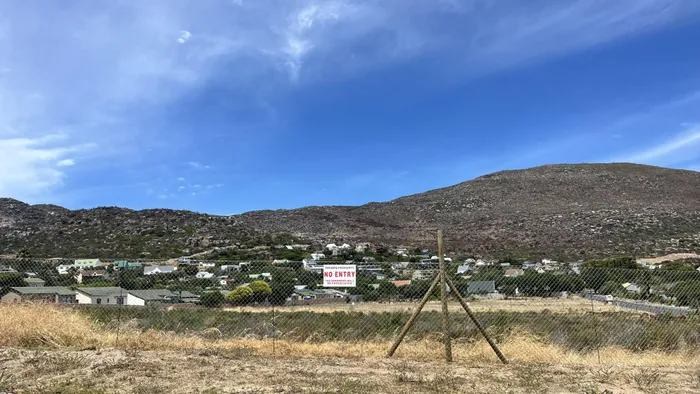
Residents are being urged to submit objections before Thursday, January 8, to a proposed 32-unit residential development on Erf 15300, commonly known as the Capri Common.
Image: Erin Carelse
Time is running out for residents and interested parties to object to a proposed 32-unit residential development on Erf 15300 in Fish Hoek, commonly known as the Capri Common.
The deadline for public submissions is Thursday, January 8.
The Sunnydale Ratepayers’ Association (SRA) has submitted a formal objection to the development, calling instead for the land to be declared a No-Go area, with conservation, rehabilitation and long-term management of the site.
According to the SRA, public submissions are important and can still influence the outcome of the application.
Erf 15300 is classified as a Critical Biodiversity Area (CBA) 1a, the highest conservation category under the Western Cape Biodiversity Spatial Plan. Land in this category is required to be kept in a natural or near-natural state, with further habitat loss avoided.
The site supports Critically Endangered Hangklip Sand Fynbos, a vegetation type listed under the National Environmental Management: Biodiversity Act (NEMBA).
Despite past disturbance, the SRA says the land shows strong ecological resilience, active natural regeneration, high restoration potential, and important ecological connectivity within the urban landscape.
In its submission, the SRA raises concerns about the Draft Basic Assessment Report (BAR) for the proposed development.
The association argues that the report understates the ecological, hydrological and community value of the site and is biased in favour of development approval.
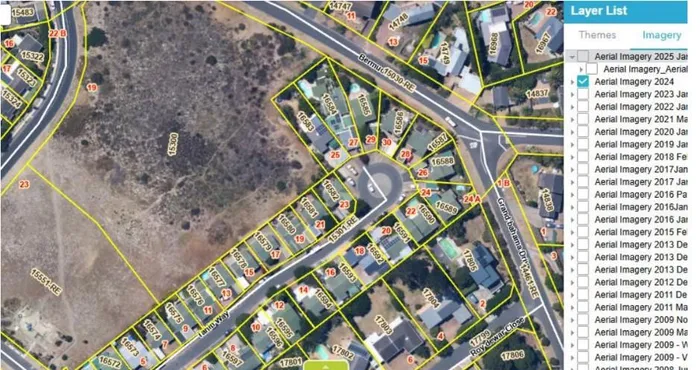
Erf 15300 showing pathways and animal tracks - CoCT EGIS 2024
Image: Supplied
Specific concerns include the use of terms such as “degraded” and “infill site," the failure to consider the site’s restoration potential and the dismissal of formal biodiversity designations based on limited, single-season surveys.
The SRA says the report does not properly apply the precautionary principle or align with the duty to avoid irreversible environmental loss as required by law.
The SRA submission refers to independent botanical records compiled by residents, professional botanists and iNaturalist, which confirm more than 73 plant species on the site, including three species of conservation concern.
Professors Rob Ingle of the University of Cape Town and Spencer C.H. Barrett of the University of Toronto have independently confirmed a significant population of Wachendorfia, a bulbous plant restricted to seasonally wet soils and listed as vulnerable by SANBI.
Concerns are also raised about freshwater and wetland assessments, which were conducted during the driest time of the year.
The SRA says these assessments failed to properly account for seasonal waterlogging, shallow groundwater and a documented wetland seep, which may require further investigation and water-use licensing.
Fauna surveys are also described as limited, with long-term resident observations indicating greater animal use of the site than recorded. Fire ecology, an important part of fynbos systems, was not adequately addressed.
The SRA argues that a 32-unit residential development is incompatible with CBA 1a management objectives, the City of Cape Town’s biodiversity and green infrastructure plans, and relevant spatial development frameworks.
Erf 15300 remains zoned for limited use, and the historical amenity zoning rights were never exercised. The association says development would require planning approvals that conflict with existing biodiversity planning instruments.
Cumulative impacts, including traffic safety and congestion on Capri Drive, nearby approved developments, and the loss of urban ecological refuge and community open space, were also not adequately assessed.
The site has functioned as a de facto public open space for more than 30 years, with ongoing community stewardship, alien vegetation clearing and informal conservation management.
The SRA concludes that approving the development would result in avoidable and irreversible ecological loss, contrary to environmental legislation and planning precedent.
The association supports only one outcome: that Erf 15300 be designated a No-Go area, followed by active rehabilitation and long-term conservation management.
Public submissions can be made before Thursday, January 8 by emailing admin@inclover.co.za and DEADPEIAAdmin@westerncape.gov.za.
Submissions should include the sender’s name and address, with the subject line: Public Participation Draft BAR for Erf 15300, Fish Hoek (DEA&DP ref: 16/3/3/6/7/1/A6/10/2196/25).