Community unites to support fynbos scientist's fight against cancer
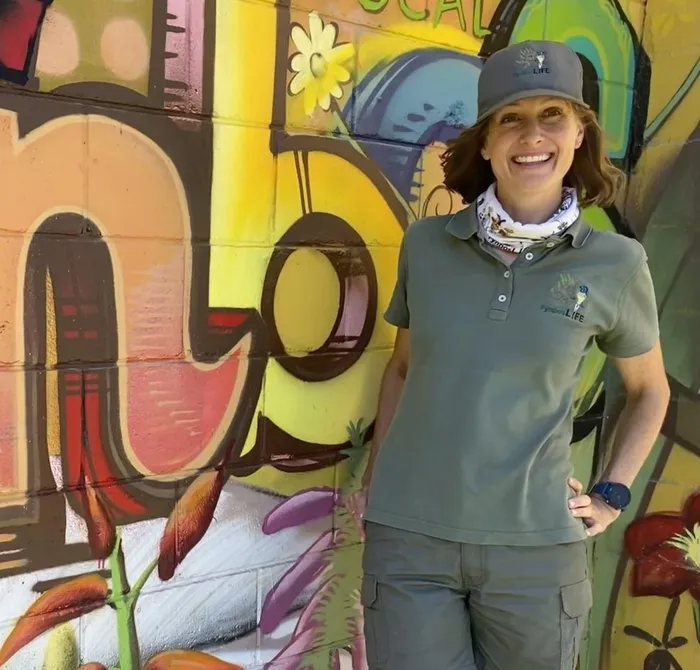
Dr Caitlin von Witt, a leading voice in fynbos conservation, continues to inspire those around her as she faces a serious health challenge.
Image: Supplied
After years spent safeguarding South Africa’s fynbos, Dr Caitlin von Witt is now facing a serious health challenge of her own, with friends and colleagues rallying to help her access pioneering cancer treatment overseas.
Dr von Witt was diagnosed on August 5, 2024, at the age of just 45 with stage 4 colon cancer and Serrated Polyposis Syndrome, a condition that increases the risk of early-onset cancer.
Since then, she has undergone six months of chemotherapy and nine surgeries, including a colectomy, colostomy, and procedures on her liver and lungs.
Despite what those close to her describe as extraordinary resilience, Caitlin now faces another six months of chemotherapy, fully aware of the poor prognosis linked to her genetic mutation.
Hope, however, has come in the form of a specialised cancer vaccine and trial treatment in Germany, which could significantly improve her chances of survival.
The treatment comes at a cost of about €85 000 - roughly R1.7 million - far beyond what she can afford on her own.
A BackaBuddy campaign, started by her friend and colleague Genie Vittu, is now raising funds to help cover the treatment, as well as travel, accommodation and supportive care.
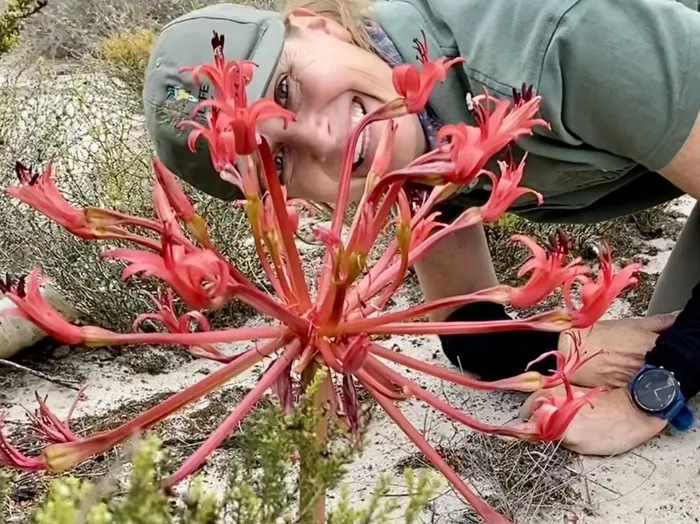
Dr von Witt, founder and director of FynbosLIFE, has dedicated her career to conserving South Africa’s unique fynbos biodiversity.
Image: Supplied
Dr von Witt holds a PhD in botany and has spent more than 20 years studying and conserving fynbos.
Over the course of her career, she has worked with SANBI, WESSA and Iziko Museums, and discovered an endangered plant species previously unknown to science.
That discovery contributed to the establishment of the Moutonshoek Protected Environment, a vital catchment area that had been under threat from mining.
Through FynbosLIFE, she has launched a range of hands-on conservation initiatives, including nurseries that group plants by veld type and “veld circles” - demonstration gardens used as outdoor classrooms and conservation tools.
She passionately advocates for local biodiversity, encouraging residents to plant indigenous species and transform their gardens into wildlife habitats.
Beyond her scientific work, she is also an avid trail runner, equestrian, artist and dancer — pursuits friends say reflect her energy and love of life.
According to Dr von Witt, the treatment involves “a personalised anti-cancer peptide vaccine designed to train the immune system to recognise and destroy tumour cells”.
She explained that the vaccine works by targeting tumour-specific neoantigens.
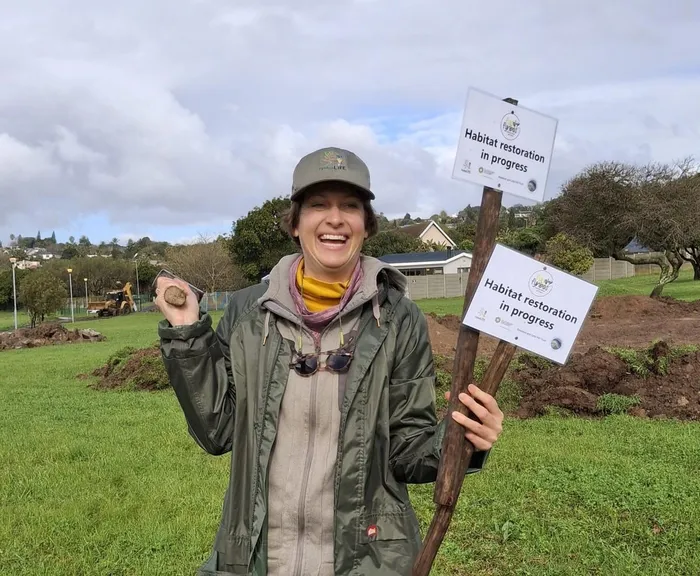
Dr von Witt combines science, conservation and community education through her work with FynbosLIFE.
Image: Supplied
“These are mutations that are unique to each patient’s cancer and can be recognised as foreign by immune cells, particularly cytotoxic T cells,” she said.
“The vaccine is designed to be used alongside conventional treatments and may be continued long term.”
Describing how the treatment is developed, she said the process starts with detailed genetic testing.
“It begins with in-depth genetic analysis of tumour and blood samples to identify specific mutations and determine which mutated peptides are most likely to trigger an immune response. These peptides are then manufactured into personalised vaccine cocktails,” she said.
She added that the vaccination programme runs over about a year and is closely monitored.
“Vaccination takes place over roughly a year, starting with an initial priming phase followed by scheduled doses, given with immune-stimulating agents. Throughout the treatment, blood tests are used to monitor whether the vaccine is activating tumour-specific immune responses, allowing doctors to refine the treatment plan.”
She noted that the treatment must be given in Germany.
“The therapy has to be administered in Germany under local medical regulations and, based on current experience, it is generally well tolerated,” she said.
In a message to supporters, she expressed deep gratitude for the help she has already received.
“Thank you, from the bottom of my heart, for contributing towards the daunting costs of my potential cancer vaccine,” she wrote. “Your generosity means more to me than I can ever fully express.”
She said knowing that so many people were standing beside her gave her strength every day.
“This treatment represents a real chance at saving my life,” she said, adding that without the possibility of a personalised peptide vaccine, she had faced “a dismal path of repeated chemo and surgeries”.
“Now, your kindness is carrying me forward, with the hope of a cure,” she said.
The campaign can be found at: https://www.backabuddy.co.za/campaign/support-caitlins-cancer-fight-future-fynbos