Concerns raised over Slangkop baboon figures as two females and infants remain separated
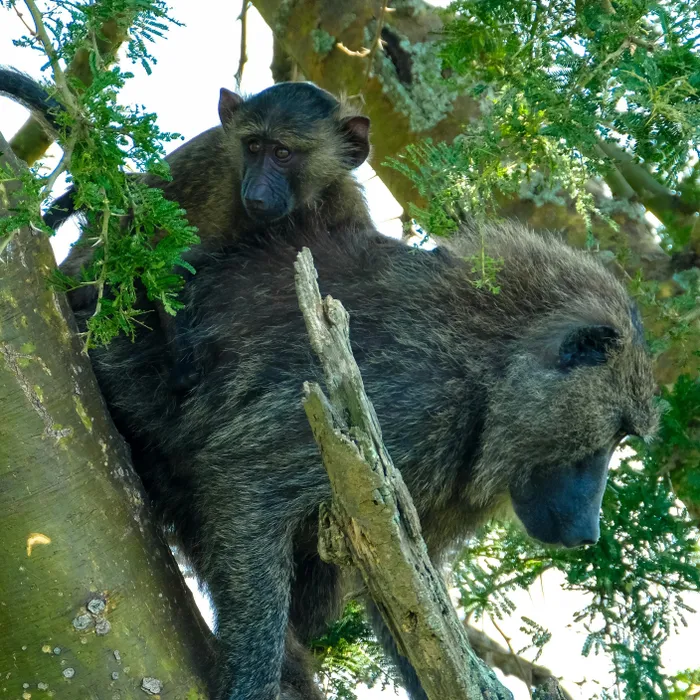
Concerns have been raised about the Slangkop baboon troop’s recent population data, as well as the welfare of two females and their infants currently apart from the main group.
Image: Francesco Ungaro
Questions are being raised about the Slangkop baboon troop after apparent discrepancies in population data emerged, while two adult females and their young infants remain apart from the main troop.
Open conservation researcher and contributor Carol Knox describes the situation as a “growing crisis”, raising concerns about transparency, accountability and animal welfare.
Ms Knox has recently authored a formal academic case study that will be submitted for peer review in the coming months.
She said two high-ranking females gave birth in Kommetjie on October 6 and October 24 last year, and that their infants are now about three to three-and-a-half months old.
“Repeated requests for these females to be guided back to their troop, both before and after giving birth, have gone unanswered,” Ms Knox said.
She added that a City official reportedly suggested the animals may now be “too urbanised” to return, despite “no documented behavioural assessment supporting this claim”.
Ms Knox said she believes little effort has been made to reunite the females with their troop.
“We have seen successful reintegrations before,” she said, pointing to the “Da Gama 4” - two females, a juvenile and an infant - who were reintegrated into the Da Gama troop with the help of monitors.
Ms Knox said community members believe too little effort has been made to reunite the females with their troop, despite previous successful reintegrations such as the “Da Gama 4”.
She said some residents fear the alternatives are severe, with one community member stating: “The risk of infanticide is better than all four being euthanised.”
Ms Knox also highlighted the loss of three adult males from the Slangkop troop in 2025 - SMART SK14, Walley UK P6 and Yellow Tag SKF1.
“These removals have destabilised the troop’s social structure and intensified fears for the remaining females and infants,” she said.
Ms Knox further questioned official figures, saying a review of the 2025 Cape Peninsula Baboon Census and mortality report shows inconsistencies.
“The troop size declined from 43 in 2024 to 28 in 2025, a drop of 15 baboons, while 14 deaths were recorded over 18 months,” she said.
She claimed age and sex categories in the data “do not add up”.
“The number of adult females appears to have increased despite a recorded adult female death, and several juveniles are unaccounted for,” Ms Knox said.
“These discrepancies undermine public trust and raise concerns about data integrity, reporting accuracy, and the true scale of troop decline.”
She is calling for “immediate reintegration efforts, transparent data correction, clear public communication, and an end to unexplained disappearances and preventable deaths”.
“The public deserves answers. The Slangkop females and infants deserve a chance to live,” she said.
Responding on behalf of the Cape Baboon Partnership (CBP), Sarah Waries, CEO of Shark Spotters, said the troop declined by 15 individuals between June 2024 and December 2025, while 14 mortalities were formally recorded during that period.
“The majority of the troop’s reduction is therefore accounted for by recorded mortalities,” Ms Waries said.
She explained that recorded deaths include “direct human-related causes” such as vehicle collisions, “indirect human-related causes” such as dog attacks, natural causes including infanticide, and cases where the precise cause could not be determined.
“Census figures are snapshots in time, while mortality records accumulate continuously,” she said.
“Juvenile numbers cannot be matched on a one-for-one basis between years.”
Ms Waries added that it is not possible to record every death.
“Baboons range widely in mountainous and natural areas where rangers must keep their distance,” she said.
“Some deaths, particularly those away from roads or urban areas, may not be observed or result in carcass recovery.”
Ms Knox said community members believe too little effort has been made to reunite the females with their troop, despite previous successful reintegrations such as the “Da Gama 4”.
She said some residents fear the alternatives are severe, with one community member stating: “The risk of infanticide is better than all four being euthanised.”
“This is a natural, though distressing, behaviour during such periods,” Ms Waries said.
Addressing the females in Kommetjie, she said they were not deliberately separated through management action.
“They moved into Kommetjie as part of a natural splintering event,” Ms Waries said.
After two baboons were removed from the area, “it was hoped the females would reintegrate with the main Slangkop troop, but this did not occur”.
She said the animals remained in the urban area, often on private property where rangers could not enter, which limited efforts to guide them back.
“In the last few days, the females and their infants have moved out of Kommetjie and are now in close proximity to the Slangkop troop,” she said.
“While they have not yet fully reintegrated, they are spending time on the periphery, and a gradual reintegration over the coming days or weeks is anticipated.”
Ms Waries said the CBP is not aware of any behavioural assessment concluding the females are “too urbanised” to return.
“This is not a position we have adopted,” she said.
She added that the Slangkop troop remains a high-priority focus area, with intensified ranger efforts, plans to speed up strategic fencing, and ongoing monitoring of troop dynamics, mortalities and welfare risks.
Find the False Bay Echo on TikTok and Instagram @ccmonlineza