Tears Animal Rescue launches campaign to combat pet overpopulation through sterilisation
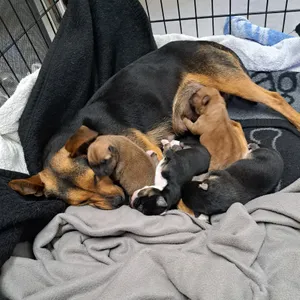
This World Spay Day, Tears is helping prevent unwanted litters and reduce animal suffering in under-resourced communities.
Image: Supplied
"The kindest rescue is the one that never has to happen. Every sterilisation represents animals who will never know hunger, injury, abandonment or euthanasia simply because there was nowhere for them to go.”
That’s the message from Dylan Malander, junior marketing lead at Tears Animal Rescue, as they prepare for a large-scale sterilisation campaign aimed at tackling one of the biggest drivers of animal suffering: uncontrolled breeding.
In the lead-up to World Spay Day on Tuesday, February 24, Tears is partnering with Animal Welfare Society South Africa (AWS) and AfriPAW to fund the sterilisation of 350 dogs and cats from low-income communities where access to veterinary care is often limited.
According to Mr Malander, pet overpopulation in the communities it serves is not an abstract issue - it’s something staff witness every single week.
"Every week, we witness unwanted litters born into circumstances where there is simply not enough food, shelter, or access to affordable veterinary care," he said.
He emphasised that the problem is rarely a lack of love from owners. Instead, it’s a lack of access.
“Most families love their animals deeply, but in many under-resourced areas, sterilisation is often not accessible or affordable. As a result, one unsterilised animal quickly becomes many.”
The teams regularly encounter puppies and kittens born in backyards, informal housing and even public spaces - often already sick or malnourished by the time help is called in.
"By then, the suffering has already begun. Rescue alone cannot solve what is fundamentally a prevention problem,” Mr Malander said.
The knock-on effect of unchecked breeding is being felt at Tears’ own facilities.
“We are currently at capacity at both our kennels and cattery,” Mr Malander said.
At present, the organisation is caring for around 70 adult dogs, 10 puppies available for adoption, and another 15 very young puppies still nursing and only a few weeks old.
At the same time, more animals from surrounding communities are waiting for space to open up.
“Our shelter was designed to provide temporary care while animals move on to homes, but the demand far outweighs the adoption rate,” he said.
“When the flow of incoming litters increases, animals stay longer, which means fewer open spaces for emergencies and more strain on staff and resources.”
Without large-scale sterilisation efforts, shelters risk becoming overcrowded holding facilities instead of places where animals get a second chance at a home.
While rescue work remains vital, Mr Malander is clear that it can never keep up with the scale of breeding.
“Rescue treats the symptom. Sterilisation stops the cause,” he said. “No shelter can build enough kennels to keep up with exponential breeding.”
He explained that the reproductive rate of dogs and cats is often underestimated. A single unsterilised female dog can have up to two litters a year, with six to ten puppies at a time.
Those puppies can begin reproducing within months. Cats reproduce even faster, with kittens able to breed from as young as four months old and females having multiple litters a year.
“Within just a few years, one unsterilised animal can be responsible for dozens - even hundreds - of descendants,” Mr Malander said. “That is how communities become overwhelmed so quickly.”
Tears says sterilising 350 animals will have a ripple effect that extends far beyond those individual pets.
“Sterilising 350 animals does not only help those individuals, but it also prevents thousands of births over time,” Mr Malander said.
Members of the public can support the campaign in several ways. A R500 sponsorship covers a sterilisation, vaccination, microchip and a bag of food for the animal to take home.
Donations of any amount are also welcome, as are contributions towards fuel for transporting animals safely between communities and clinics.
TEARS also encourages people to spread awareness about the importance of sterilisation and to adopt rather than buy pets.
“South Africa does not have a shortage of animals - it has a shortage of accessible sterilisation,” Mr Malander said.
“Prevention is not just a welfare strategy; it is the most humane solution we have.”
Donations can be made here.
Find the False Bay Echo on TikTok and Instagram @ccmonlineza