Free survival swimming lessons could save a child’s life
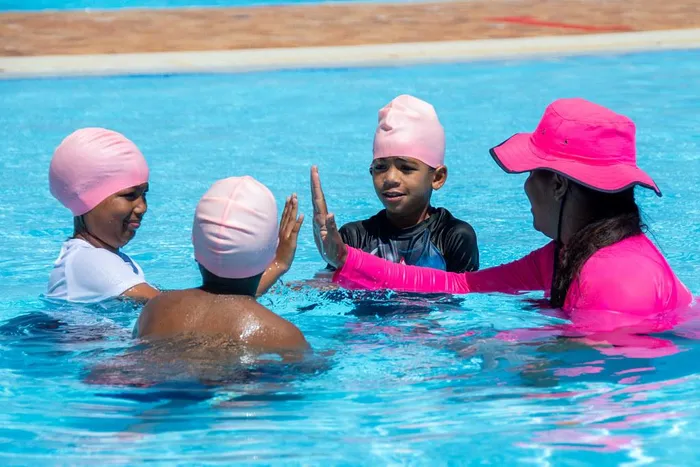
Learning to float, stay calm, and move safely in water - these free Survival Swimming lessons teach skills that could one day save a life.
Image: Supplied
The message from the National Sea Rescue Institute (NSRI) is clear: knowing how to survive when you suddenly get out of your depth can be the difference between life and death.
That is why the NSRI is urging families in the far south to make use of its free Survival Swimming lessons currently running at Muizenberg Swimming Pool.
The programme, launched in 2020, teaches children - and even adults - four basic skills that could help them stay alive if they unexpectedly fall into deep water.
These are how to control breathing, open eyes under water, float, and move at least five metres through the water to safety.
Andrew Ingram, communications manager and drowning prevention expert at the NSRI, said the aim is to give as many children as possible a skill that everyone living in South Africa should have.
“We live in a country with a coastline of over 3,000 kilometres and many dams and rivers that people depend on for food, drinking water, washing and recreation,” he said.
“It is critical that we teach our children how to survive a sudden immersion. If they suddenly find themselves out of their depth, they must know how to float and the direction to move back to safety.”
The lessons are open to everyone and are free of charge, although normal entry fees to the municipal pool still apply. Sessions take place on Saturdays from 10am to 12pm and will run until Saturday, March 7.
The Survival Swimming programme grew out of the NSRI’s long-running water safety education initiative, which has reached more than 5.5 million children since 2006.
The organisation now hopes to expand survival swimming lessons using a volunteer-based system, similar to its sea and inland rescue crews.
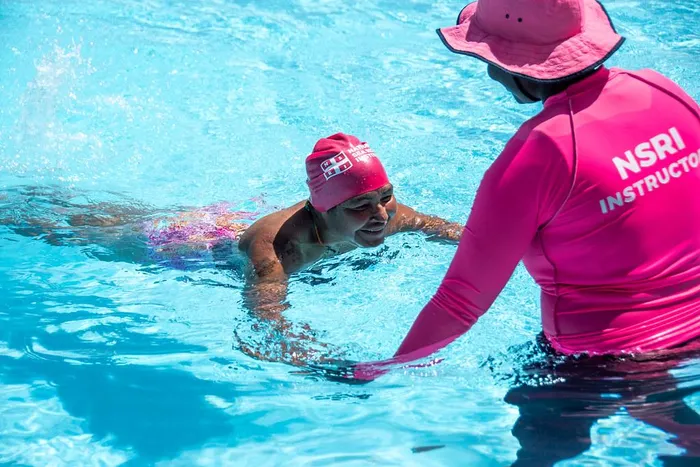
These free Survival Swimming lessons are open to everyone! Learn life-saving skills in a safe, supportive environment and gain confidence in the water.
Image: Supplied
Every summer, thousands of South Africans head to the coast to enjoy the sea.
Yet few realise that one of the ocean’s most dangerous forces can form right where they want to swim. Rip currents are powerful channels of water that flow away from the beach and are responsible for many drownings along the coastline.
“It’s easiest to think of a rip current as a river of water that flows away from the beach out to the backline,” Mr Ingram explained.
“It forms because, as waves come in, the water has to find a way back out to sea.”
The shape and structure of the seabed often directs this outward flow, creating a narrow, fast-moving stream that can sweep swimmers out in seconds.
Caville Abrahams, NSRI drowning prevention regional coordinator in the Western and Northern Cape, said drowning remains one of the leading causes of accidental death in South Africa, particularly among children.
“In many communities, access to safe swimming facilities and water safety education is limited,” he said.
Across the region, NSRI instructors visit schools to deliver survival swimming and water safety programmes, focusing on children aged five to 14.
Mr Ingram added that NSRI crews regularly respond to drowning-in-progress emergencies, most often at beaches without lifeguards or outside lifeguarded hours. Alcohol use, children not being able to swim, lack of supervision and rip currents are among the major contributing factors.
Basic survival skills can make a critical difference.
“Knowing how to survive when you suddenly get out of your depth is the difference between life and death,” Mr Ingram said.
“Knowing basic water safety, how to float, who to call in an emergency, and how to do CPR are life skills that everyone should know.”
The NSRI also reminds the public to swim only at beaches with lifeguards, stay between the flags, and never enter the water to help someone without taking something that floats.
Pink Rescue Buoys placed along the coastline are designed to provide emergency flotation and should be protected and used in an emergency.
Parents, schools and community groups interested in the free Survival Swimming lessons can email survivalswimming@searescue.org.za for more information.